Shep's Place Family Tree

Maria Viola Vi NICHOLLS
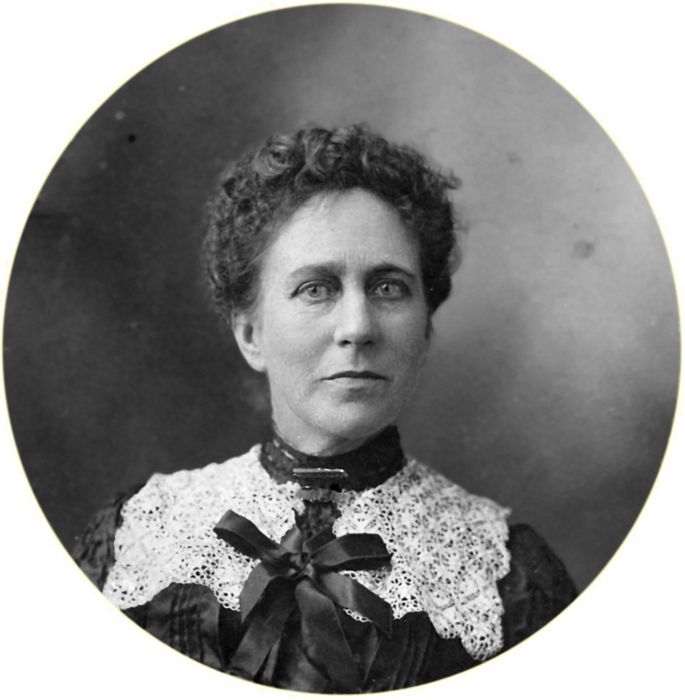
1910 Maria Viola "Vi" Stevenson
Maria Viola Vi NICHOLLS  ‎(I6083)‎
Given Names: Maria Viola
Surname: NICHOLLS
Nickname: Vi
Married Name: Maria Viola STEVENSON

Gender: FemaleFemale
      

Birth: 28 January 1855 Inverleigh, Victoria, Australia
Death: 25 July 1935 ‎(Age 80)‎ Craiglea 79 Unley Road, Unley, South Australia, Australia
Personal Facts and Details
Birth 28 January 1855 Inverleigh, Victoria, Australia

Marriage Robert Rowland STEVENSON - 5 January 1877 ‎(Age 21)‎ Sutton Grange, Linton, Victoria, Australia


Note: Officiating was Rev. J.B. Smith, Methodist minister. Witnesses were Maria's sister Clara Isobella ‎(Mrs John Inglis)‎ and her brother Edmund Nicholls.
Name Note

Note: Her name was supposed to be pronounced "ma-reye-a". She so disliked it that she answered only to Viola, usually shortened to "Vi". Her son Stuart never called her anything else although the remainder of the family called her by the more dignified "Mater".
Death 25 July 1935 ‎(Age 80)‎ Craiglea 79 Unley Road, Unley, South Australia, Australia

Biographical Notes between 1920 and 1935 ‎(Age 64)‎ Craiglea 79 Unley Road, Unley, South Australia, Australia


Hide Details Note: Maria
Maria remained at the family home at Unley Road. It was left to her for her life time. Daughters Ada and Jean were with her, and for a time bachelor son Ronald. She had a small Superannuation pension and the sons put their shares of the father's estate into a special fund that was invested, so that there was always sufficient money for any large expenses. Maria's reputation amongst her children was that of a stern Victorian moralist, a strict disciplinarian with almost no sense of humour and easily shocked, but to her grandchildren she was kind and generous and liked nothing better than to prepare elaborate meals. Her wine trifles were guaranteed to intoxicate the most hardened infant in spite of keeping to her narrow Methodist outlook which should have eschewed Strong Drink in any form. When this trifle was a bit much for a child its parent or an uncle was by no means averse to cleaning up the plate.

Maria and her daughters kept the house spotless and the children well dressed. She had a certain elegance of attire though always in black after RRS died. Her black seal skin fur stole lined with heavy satin still survives. The house as the writer recalls its appearance in the 1920s retained its late Victorian furnishings. These had been purchased by RRS mainly at auctions and according to Ada, some pieces and ornaments had belonged to a State governor who held a clearing sale before returning to England.

Mother's Day, Maria's birthday ‎(January 28)‎, and the family get-together held annually on Boxing Day, were about the only occasions when the front parlour was used. There were floor to ceiling tapestry curtains in dark green and gold tied back with thick silk cord at the bay window which faced Unley Road and lace curtains veiled the glass. The carpet was of so dark a green, that to a child moving into the room there was fear that there was no substance under foot and one just might step into nothingness.

There was an upright piano ‎(Jean was the musician)‎ and six chairs of Italian walnut with carved round open backs, a lady chair and a scroll back sofa, all in matching upholstery, the original floral tapestry but much faded. A papier-mache firescreen in shiny black had a sea scene complete with light house, outlined in mother of pearl - the walls were decorated with large photographs of the family, each in a broad carved frame. The front bedroom had cedar furniture, some of which is at this house and in excellent condition. Maria took a daily siesta after the midday dinner upon a cedar couch upholstered in delicate pink.

The dining/living room was the largest with a family size table and the many chairs needed and a tall backed sideboard laden with an array of glass and silverware. The silver tea service of ornate design has an 1843 hallmark. Under the window with its cedar venetian blind and Nottingham lace curtains was a sofa. This black leather covered horror was stuffed with horse hair that sharply pricked young bare legs and was so slippery that the same child continually slid off and so was scolded by Maria for supposed restlessness. There were some very large engravings of the Zulu Wars with gory details and black and white prints of Marcus Stone drawings such as "The Love Letter" and "Two Strings to her Bow". The children presented Maria with afternoon teacups on the occasion of her Silver Wedding and a half dozen of these are intact. The truly vast cheese dish and cover, redolent of past occupation, and patterned with cabbage roses, was to eventually bring a good price from an antique dealer.

On one side of the small tiled grate ‎(where the fire radiated almost no heat)‎ was the "Morris" chair and something a lot more comfortable for Maria on the other side. The high mantel piece had carefully spaced ornaments and in the centre the presentation clock from the Railway Department fellow workers. It was of imitation onyx and brass, very ornate, with double pillars at each end so that it looked like a miniature building. It was wound with a very large brass key. The remainder of the house was unremarkable except for the deal kitchen table which was scraped and scrubbed to keep its original pale surface. Yet another sofa was beneath the window for Ada to take her siesta, and both took up a lot of space.

The writer lived Maria for a period in 1933 while Ada was away on an extended holiday and can testify to the excellence of her grandmother's cooking. A truly sumptuous high tea was prepared each Saturday to be eaten when I returned from the matinee at the local cinema. Maria of course supplied the necessary sixpence to go in. It was winter and almost dark when the picture ended and after the screening of "The Invisible Man" it was a case of run home as fast as possible. At night Maria wandered about the house with a candle. She said her nocturnal walks were due to getting up to children for so many years and she had never been able to sleep well since those days. However, Keith who suffered a similar inability to sleep, merely put it down to an ancestor having murdered a Chinaman. She presented me with my first wristlet watch for being her companion during those weeks.

By this time Unley had become densely built over and the open land round about when RRS purchased had all vanished. There is an envelope still extant addressed to "Mrs. R.R. Stevenson, Truly Road, Imly, Adelaido" which came from America when Maria sent for coloured prints of Ida Rentoul fairy pictures for me in the 1920s. The pictures ‎(framed)‎ remain also.

It was from "Truly Road, Imly" that Maria took her last outing to Clarence Park one Sunday, with Ada. She had a premonition this would be her last visit and brought a prized glass beer mug she filled with port wine jelly ‎(made with port wine)‎ to Keith. There was no indication of any illness and her very blue eyes were bright as ever, but in the early hours she had a stroke and remained unconscious for eight days. She had a dread of hospitals so was nursed at home. She awoke just once when Keith was keeping the night watch and accused him of putting her in hospital. He pointed out the familiar furniture, the pictures and ornaments of her own room, and comforted she slept again, never to awake.

At death she returned to lovely youth and to me, in her coffin looked no more than 17. Her hair was almost untouched with grey which added to the young look, and she had retained her slender figure.

There were violets and narcissus in her hands. She was buried beside RRS at West Terrace in the family plot. She left an estate of £377/10/1 and a statement dated October 2, 1935 shows her two bank balances and Elder Smith & Co. shares and sets out the expenses. These include £19/5/6 funeral costs. The seven surviving children each received £47/14/11.

The house which in 1893 RRS had purchased for £50 to be sold under the terms of his will and the money divided between the children, but the Contract note is dated some 5 years later, on August 29th, 1940 and says that "the house at the corner of Unley Road and Ella Street, Parkside, having a frontage of 50 feet to Unley Road by a depth of 120 feet or thereabouts, together with the villa house of 6 rooms and all conveniences and improvements now thereupon, at present occupied by Mrs. Bowden, and known as street no. 79 was purchased from the agents Allen and Barton of Unley for £800 by Rich. Sidney Fidock, master printer, of Cottonville, S.A." The Executors were Blaine and Stuart.

Burial West Terrace Cemetery, Adelaide, South Australia, Australia

Last Change 4 December 2007 - 14:19
View Details for ...

Parents Family  (F2113)
Henry NICHOLLS
-
Marian DOWNES
-
Private
-
Maria Viola Vi NICHOLLS
1855 - 1935
Private
-

Immediate Family  (F2109)
Robert Rowland STEVENSON
1847 - 1920
Ada Margaret STEVENSON
1878 - 1959
‎(unknown)‎ UNKNOWN
-
Clara Harriett Hettie STEVENSON
1882 - 1969
Walter Rowland STEVENSON
1883 - 1959
Ronald Robert STEVENSON
1885 - 1960
Stuart Henry STEVENSON
1888 - 1965
Blaine Reid STEVENSON
1890 - 1974
Keith Melville STEVENSON
1893 - 1964
Jean Lilian STEVENSON
1896 - 1933


Notes
Marriage Officiating was Rev. J.B. Smith, Methodist minister. Witnesses were Maria's sister Clara Isobella ‎(Mrs John Inglis)‎ and her brother Edmund Nicholls.
Biographical Notes Maria
Maria remained at the family home at Unley Road. It was left to her for her life time. Daughters Ada and Jean were with her, and for a time bachelor son Ronald. She had a small Superannuation pension and the sons put their shares of the father's estate into a special fund that was invested, so that there was always sufficient money for any large expenses. Maria's reputation amongst her children was that of a stern Victorian moralist, a strict disciplinarian with almost no sense of humour and easily shocked, but to her grandchildren she was kind and generous and liked nothing better than to prepare elaborate meals. Her wine trifles were guaranteed to intoxicate the most hardened infant in spite of keeping to her narrow Methodist outlook which should have eschewed Strong Drink in any form. When this trifle was a bit much for a child its parent or an uncle was by no means averse to cleaning up the plate.

Maria and her daughters kept the house spotless and the children well dressed. She had a certain elegance of attire though always in black after RRS died. Her black seal skin fur stole lined with heavy satin still survives. The house as the writer recalls its appearance in the 1920s retained its late Victorian furnishings. These had been purchased by RRS mainly at auctions and according to Ada, some pieces and ornaments had belonged to a State governor who held a clearing sale before returning to England.

Mother's Day, Maria's birthday ‎(January 28)‎, and the family get-together held annually on Boxing Day, were about the only occasions when the front parlour was used. There were floor to ceiling tapestry curtains in dark green and gold tied back with thick silk cord at the bay window which faced Unley Road and lace curtains veiled the glass. The carpet was of so dark a green, that to a child moving into the room there was fear that there was no substance under foot and one just might step into nothingness.

There was an upright piano ‎(Jean was the musician)‎ and six chairs of Italian walnut with carved round open backs, a lady chair and a scroll back sofa, all in matching upholstery, the original floral tapestry but much faded. A papier-mache firescreen in shiny black had a sea scene complete with light house, outlined in mother of pearl - the walls were decorated with large photographs of the family, each in a broad carved frame. The front bedroom had cedar furniture, some of which is at this house and in excellent condition. Maria took a daily siesta after the midday dinner upon a cedar couch upholstered in delicate pink.

The dining/living room was the largest with a family size table and the many chairs needed and a tall backed sideboard laden with an array of glass and silverware. The silver tea service of ornate design has an 1843 hallmark. Under the window with its cedar venetian blind and Nottingham lace curtains was a sofa. This black leather covered horror was stuffed with horse hair that sharply pricked young bare legs and was so slippery that the same child continually slid off and so was scolded by Maria for supposed restlessness. There were some very large engravings of the Zulu Wars with gory details and black and white prints of Marcus Stone drawings such as "The Love Letter" and "Two Strings to her Bow". The children presented Maria with afternoon teacups on the occasion of her Silver Wedding and a half dozen of these are intact. The truly vast cheese dish and cover, redolent of past occupation, and patterned with cabbage roses, was to eventually bring a good price from an antique dealer.

On one side of the small tiled grate ‎(where the fire radiated almost no heat)‎ was the "Morris" chair and something a lot more comfortable for Maria on the other side. The high mantel piece had carefully spaced ornaments and in the centre the presentation clock from the Railway Department fellow workers. It was of imitation onyx and brass, very ornate, with double pillars at each end so that it looked like a miniature building. It was wound with a very large brass key. The remainder of the house was unremarkable except for the deal kitchen table which was scraped and scrubbed to keep its original pale surface. Yet another sofa was beneath the window for Ada to take her siesta, and both took up a lot of space.

The writer lived Maria for a period in 1933 while Ada was away on an extended holiday and can testify to the excellence of her grandmother's cooking. A truly sumptuous high tea was prepared each Saturday to be eaten when I returned from the matinee at the local cinema. Maria of course supplied the necessary sixpence to go in. It was winter and almost dark when the picture ended and after the screening of "The Invisible Man" it was a case of run home as fast as possible. At night Maria wandered about the house with a candle. She said her nocturnal walks were due to getting up to children for so many years and she had never been able to sleep well since those days. However, Keith who suffered a similar inability to sleep, merely put it down to an ancestor having murdered a Chinaman. She presented me with my first wristlet watch for being her companion during those weeks.

By this time Unley had become densely built over and the open land round about when RRS purchased had all vanished. There is an envelope still extant addressed to "Mrs. R.R. Stevenson, Truly Road, Imly, Adelaido" which came from America when Maria sent for coloured prints of Ida Rentoul fairy pictures for me in the 1920s. The pictures ‎(framed)‎ remain also.

It was from "Truly Road, Imly" that Maria took her last outing to Clarence Park one Sunday, with Ada. She had a premonition this would be her last visit and brought a prized glass beer mug she filled with port wine jelly ‎(made with port wine)‎ to Keith. There was no indication of any illness and her very blue eyes were bright as ever, but in the early hours she had a stroke and remained unconscious for eight days. She had a dread of hospitals so was nursed at home. She awoke just once when Keith was keeping the night watch and accused him of putting her in hospital. He pointed out the familiar furniture, the pictures and ornaments of her own room, and comforted she slept again, never to awake.

At death she returned to lovely youth and to me, in her coffin looked no more than 17. Her hair was almost untouched with grey which added to the young look, and she had retained her slender figure.

There were violets and narcissus in her hands. She was buried beside RRS at West Terrace in the family plot. She left an estate of £377/10/1 and a statement dated October 2, 1935 shows her two bank balances and Elder Smith & Co. shares and sets out the expenses. These include £19/5/6 funeral costs. The seven surviving children each received £47/14/11.

The house which in 1893 RRS had purchased for £50 to be sold under the terms of his will and the money divided between the children, but the Contract note is dated some 5 years later, on August 29th, 1940 and says that "the house at the corner of Unley Road and Ella Street, Parkside, having a frontage of 50 feet to Unley Road by a depth of 120 feet or thereabouts, together with the villa house of 6 rooms and all conveniences and improvements now thereupon, at present occupied by Mrs. Bowden, and known as street no. 79 was purchased from the agents Allen and Barton of Unley for £800 by Rich. Sidney Fidock, master printer, of Cottonville, S.A." The Executors were Blaine and Stuart.
Name Note Her name was supposed to be pronounced "ma-reye-a". She so disliked it that she answered only to Viola, usually shortened to "Vi". Her son Stuart never called her anything else although the remainder of the family called her by the more dignified "Mater".

View Notes for ...


Sources

Source
Eunice Margaret Stevenson

View Sources for ...


Media

Multimedia Object
1910 Maria Viola "Vi" Stevenson1910 Maria Viola "Vi" Stevenson  ‎(M477)‎
Type: Photo

View Media for ...


Family with Parents
Father
Henry NICHOLLS ‎(I6090)‎
Birth Yes
Mother
Marian DOWNES ‎(I6091)‎
Birth Yes
#1
Sister
#2
Maria Viola Vi NICHOLLS ‎(I6083)‎
Birth 28 January 1855 Inverleigh, Victoria, Australia
Death 25 July 1935 ‎(Age 80)‎ Craiglea 79 Unley Road, Unley, South Australia, Australia
#3
Brother
Family with Robert Rowland STEVENSON
Husband
Robert Rowland STEVENSON ‎(I6082)‎
Birth 3 July 1847 30 22 Ardvorlich, Perthshire, Scotland
Death 24 October 1920 ‎(Age 73)‎ Craiglea 79 Unley Road, Unley, South Australia, Australia
8 years

 
Maria Viola Vi NICHOLLS ‎(I6083)‎
Birth 28 January 1855 Inverleigh, Victoria, Australia
Death 25 July 1935 ‎(Age 80)‎ Craiglea 79 Unley Road, Unley, South Australia, Australia

Marriage: 5 January 1877 -- Sutton Grange, Linton, Victoria, Australia
18 months
#1
Daughter
Ada Margaret STEVENSON ‎(I6101)‎
Birth 29 June 1878 30 23 Bellview Cottage, Port Wakefield, South Australia, Australia
Death 25 January 1959 ‎(Age 80)‎ Royal Adelaide Hospital, Adelaide, South Australia, Australia
#2
Daughter
#3
Daughter
Clara Harriett Hettie STEVENSON ‎(I6103)‎
Birth 14 February 1882 34 27 Bowden, South Australia, Australia
Death 25 July 1969 ‎(Age 87)‎ Prospect, South Australia, Australia
19 months
#4
Son
Walter Rowland STEVENSON ‎(I6104)‎
Birth 3 September 1883 36 28 Kingston, South Australia, Australia
Death 4 August 1959 ‎(Age 75)‎ Perth, Western Australia, Australia
2 years
#5
Son
Ronald Robert STEVENSON ‎(I6105)‎
Birth 11 December 1885 38 30 Bordertown, South Australia, Australia
Death 20 January 1960 ‎(Age 74)‎ Freeling, South Australia, Australia
2 years
#6
Son
Stuart Henry STEVENSON ‎(I6106)‎
Birth 10 February 1888 40 33 Bordertown, South Australia, Australia
Death 22 August 1965 ‎(Age 77)‎ 24 Welland Avenue, Welland, South Australia, Australia
2 years
#7
Son
Blaine Reid STEVENSON ‎(I6107)‎
Birth 31 March 1890 42 35 Bordertown, South Australia, Australia
Death 4 December 1974 ‎(Age 84)‎ Ridge Park Private Hospital, Myrtle bank, South Australia, Australia
3 years
#8
Son
Keith Melville STEVENSON ‎(I5752)‎
Birth 11 June 1893 45 38
Death 31 March 1964 ‎(Age 70)‎
3 years
#9
Daughter
Jean Lilian STEVENSON ‎(I6108)‎
Birth 15 July 1896 49 41 Craiglea 79 Unley Road, Unley, South Australia, Australia
Death 5 July 1933 ‎(Age 36)‎ Craiglea 79 Unley Road, Unley, South Australia, Australia